

At first glance, the question seems straightforward: modern or traditional.
In practice, the answer is rarely so fixed. The most enduring homes do not begin with a category, but with a careful reading of place and a clear understanding of how life will unfold within it. What we describe as “style” tends to emerge from those decisions rather than precede them.
Medina Links: The Strength of Tradition
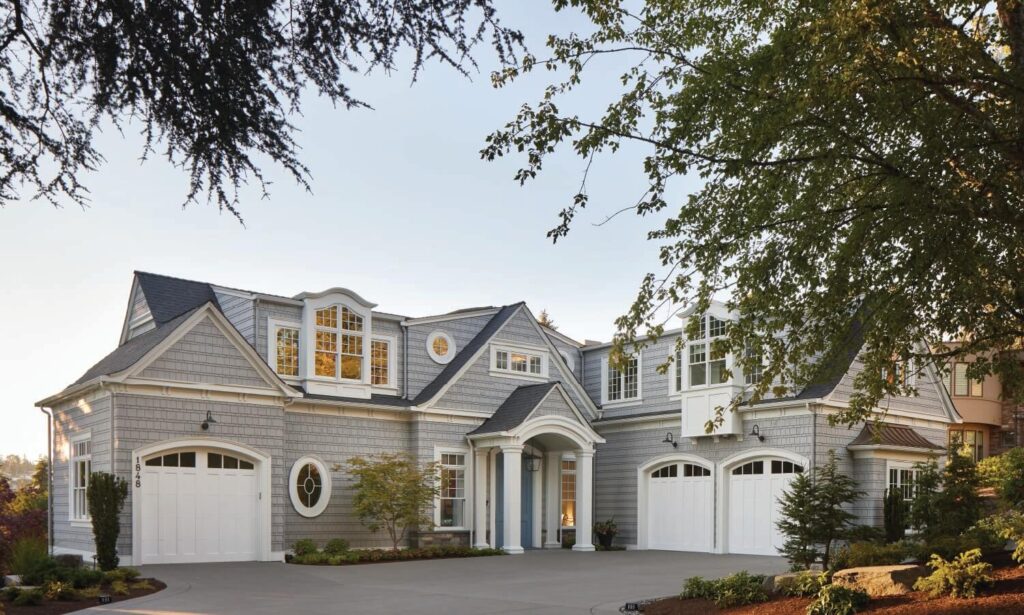
In Medina Links, tradition is expressed through refinement and continuity with its surroundings.
Set within one of the Pacific Northwest’s most established communities, the home reflects a sensitivity to context. The architecture draws from classical influence while supporting the expectations of modern living.
The composition feels grounded and intentional. Materials carry weight and texture, creating a sense of permanence that aligns with the character of the neighborhood. Proportion and symmetry guide the design, offering a quiet sense of order and familiarity.
Inside, spaces are composed rather than open. Rooms have presence and purpose, creating an experience that feels both intimate and enduring.
This is where traditional design excels. It creates homes that feel rooted, timeless, and deeply connected to place.
The Gallery: The Clarity of Modern
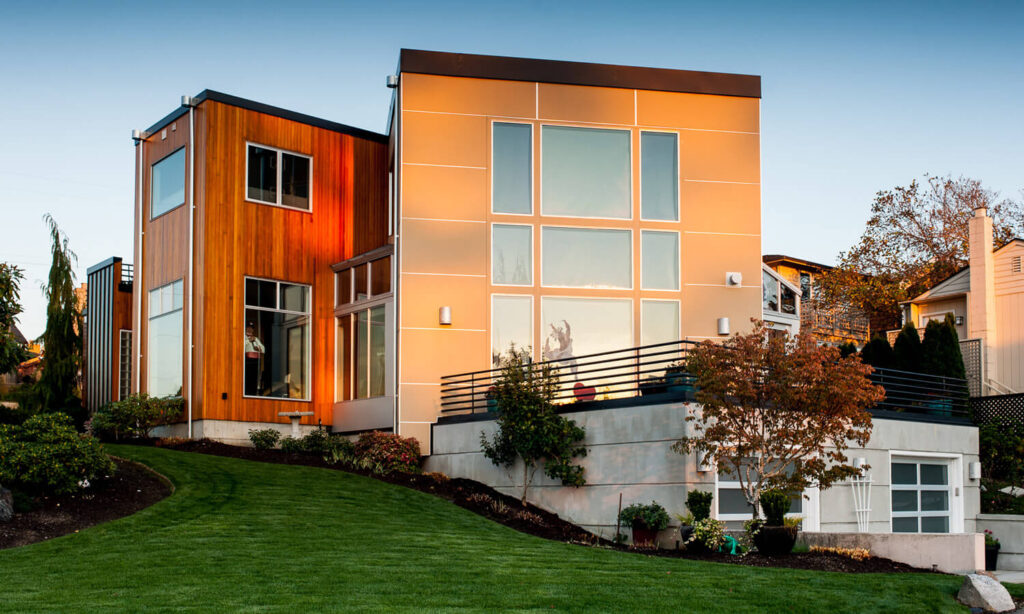
The Gallery moves in a different direction, toward openness and expression.
Designed as both a home and a setting for art, the architecture is intentionally restrained. Clean lines and expansive walls create a backdrop where light, volume, and curated elements take focus. Space is not simply occupied, it is experienced.
Large openings connect interior spaces to the surrounding environment, while carefully controlled light enhances both artwork and architecture. The flow is open, but deliberate, allowing each space to feel distinct without interruption.
Modern design here is not minimal for its own sake. It is purposeful. It removes distraction and allows light, form, and composition to define the experience.
Kingfisher Cliff: Where the Two Meet
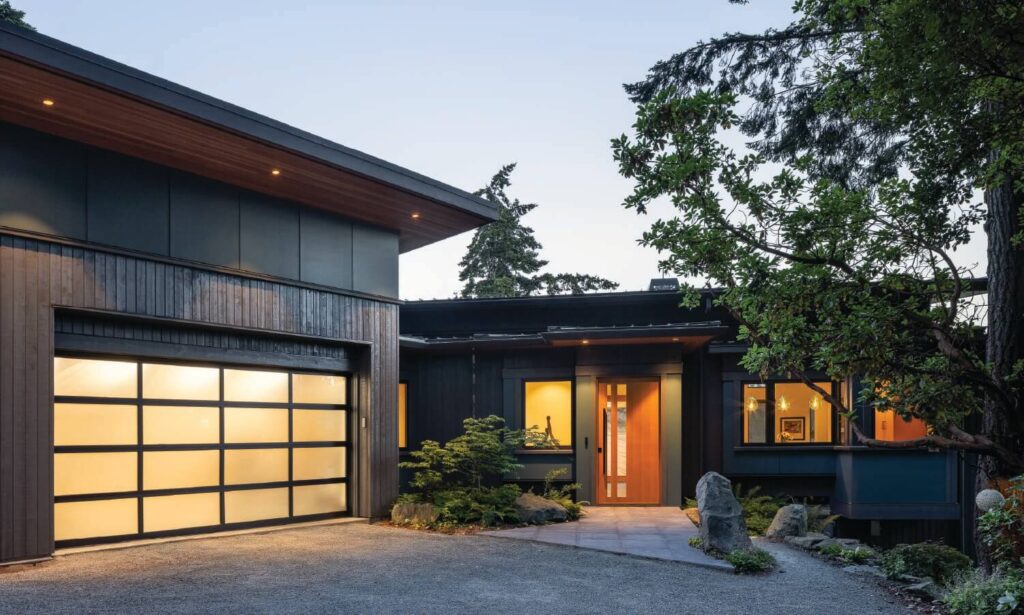
In Kingfisher Cliff, the distinction between modern and traditional begins to soften.
Set within a dramatic landscape, the home responds directly to its surroundings. Strong structural forms and expansive glass introduce a modern sensibility, while natural materials and a grounded composition provide warmth and familiarity.
The relationship to the site becomes the defining feature. Views are framed with care, and the home feels both open and sheltered at once. It is not purely one style or the other. It is a synthesis.
Here, modern and traditional are not opposing ideas. They are tools, used thoughtfully to create something that feels both clear and enduring.
Choosing What Is Right for You
Homes grounded in tradition often rely on enclosure, material depth, and a sense of order that unfolds over time. More contemporary approaches tend to emphasize openness, continuity, and the movement of light through space. Both offer meaningful possibilities, but neither is inherently more appropriate than the other.
What matters is how the home engages its setting and supports the patterns of daily life. When those elements are carefully considered, the architectural language follows with clarity.
Begin Your Own Story
If you are considering what direction is right for your home, begin with your site and your life within it.
We approach each project as a collaboration, an opportunity to shape something that feels both intentional and deeply connected to its surroundings.
Through that process, a home takes form—one that reflects its place and the people it is meant to serve.
If you are beginning to consider what your own home might become, we invite you to reach out and start a conversation with our team.