

In the spring of 1983, I somehow set the record at my elementary school in the Presidential Physical Fitness Test for most pull-ups. Strangely, I don’t think that record was ever broken before the school closed and the buildings were demolished decades later. And look—there’s no proof anymore anyway, right? Trust me.
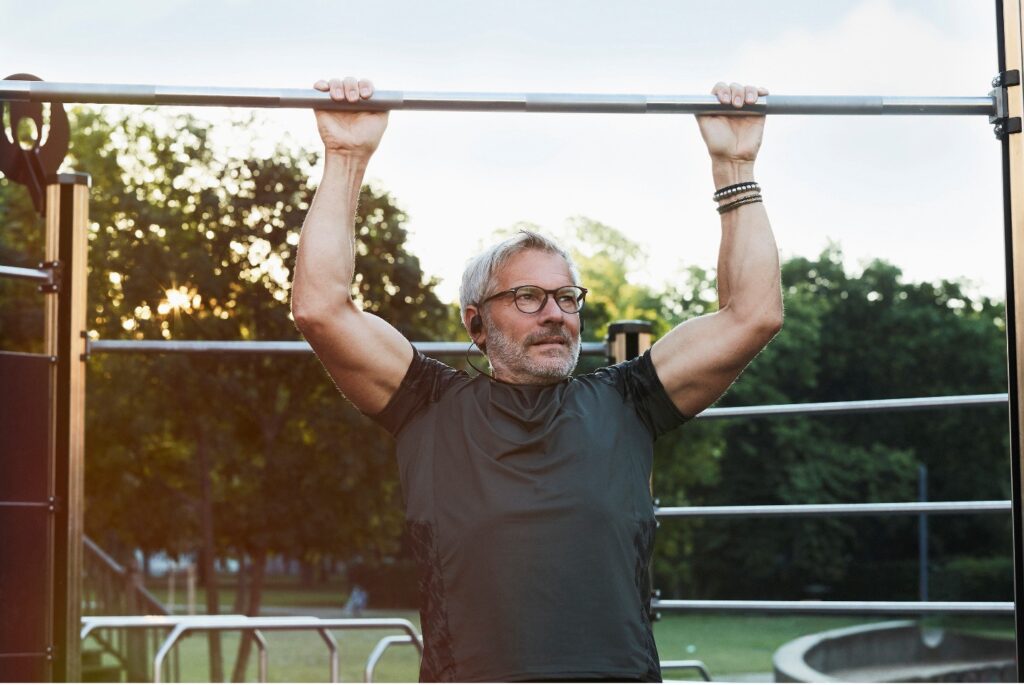
That unbroken record—and the vanished building that once held it—have become a bit of a metaphor for me lately. They’ve been sitting in the back of my mind as we’ve been working through something much bigger: changing our company’s name and thinking carefully about what it means to steward a legacy.
Now back to 1983.
I was in sixth grade. Thriller topped the charts. Reaganomics was a new idea. And Return of the Jedi was set to premiere on my twelfth birthday—which, by the way, is still the best birthday gift I’ve ever received. May the Force be with you.
While Jedi launched my lifelong Star Wars fandom, another beginning happened that same spring.
A man named Curtis (Curt) Gelotte launched his architectural firm in his garage. Sort of Steve Jobs/Wozniak style—though it was his own garage, and not his parents’ (the moochers).
I’ve been told Curt took an old drafting table, pushed it into a corner, built a couple of temporary walls, added a space heater, and installed some flickering fluorescent lights. And just like that, Curtis Gelotte Architects was born.

From the beginning, Curt was a gifted designer. Looking back at his early work, I’d say it had a theme—and who doesn’t love a theme? He was a huge fan of Frank Lloyd Wright, and it showed. I affectionately call this his “Gelotte Prairie Style Period.”
But the theme mattered less than the standard he established: thoughtful design, rigorously pursued.
Over time, his work expanded into a wide range of styles. I once asked Curt where that diversity came from. His answer was simple: listening.
Listening to clients.
Listening to their ideas.
Listening to their hopes and dreams.
Then translating all of that into homes that reflected who they were.
Through that combination of design excellence and genuine listening, the practice grew. Accolades followed. An impressive portfolio took shape. And along the way, many talented architects contributed to what the firm would become—too many to name here.
One of those talents was Scott Hommas, who joined Curt around the time I was starting college. Scott quickly distinguished himself as a designer and leader, strengthening the culture of high standards and client-centered thinking.
It would be over ten years later before my own story intersected with theirs.
I graduated from college then spent five years in Ohio beginning my career. With our first son on the way, we moved home in 2001 during the dot-com recession where Providence (and a stack of résumés) led me to Curt, Scott and my first job at the firm.
That was almost twenty-five years ago.
Those early years working for Curt and Scott shaped how I still approach every project today: balancing creativity, discipline, and long-term stewardship of our clients’ investments.
Fast forward to January 1, 2019.
I am a partner in what was now Gelotte Hommas Drivdahl Architecture. Curt was fully retired. The company was now in Scott’s and my hands.
And like good designers, we asked ourselves a fundamental question: How do you honor decades of legacy while still building for the future?
Because here’s the thing: legacy is powerful. But it’s also heavy. It follows you everywhere. Sometimes it feels like an impossible-to-ignore tail on a crocodile.

At its best, that tail provides balance, stability, and propulsion. In the water, it’s pure power.
At its worst, even the strongest tail can become dead weight—slowing momentum and limiting precision. On land, all that tail does for our friendly crocodile is drag behind.
So we started asking hard questions.
What’s working?
What isn’t?
Who were we then?
Who are we now?
Who are we becoming?
We recognized that we hadn’t just inherited a company—we had been entrusted with a legacy. And stewardship carries responsibility. To our clients. To our staff. To our partners. To the next generation.
I’ve seen organizations cling so tightly to “the way we’ve always done it” that they slowly slide into irrelevance. I won’t name names, but last December we attended a beloved holiday show that seemed frozen in time. Let’s just say…1986 stopped by and left their calling card.
It was a good reminder that tradition, when left unchecked, can slip from meaningful into merely familiar.
On the other hand, there are wonderful examples of legacy inspiring innovation.
I was struck recently by Apple TV’s refreshed logo—a playful, old-school approach that honored its history while updating its expression. It was a reminder that renewal doesn’t require abandoning who you are. It requires understanding it deeply.

We realized our own name was part of this conversation.
Over the years, our firm has grown, evolved, and matured. Our work has become more focused. Our leadership is clearer. Our culture is stronger. Yet our name had become long, complex, and—frankly—a bit unwieldy.
While Gelotte Hommas Drivdahl Architecture reflects our history, it no longer reflects our personality.
So, we began asking: What if our name could better express who we are now—while still honoring where we came from?
We didn’t want to erase anything. We wanted to distill it.
To respect forty-plus years of work while simplifying how we present ourselves to the world.
For our clients, this matters.
It means clearer communication and the same uncompromising commitment to thoughtful design—now expressed with greater confidence and simplicity.
We are not viewing our legacy as a constraint; we see it as an expert guide.
It continues to steer us toward what matters most: great design, attentive listening, and genuine partnership with our clients.
Our “tail” hasn’t disappeared. We embrace its weight. We understand its purpose. And we’ve learned how to let it guide us forward.
With that spirit, I’m excited to introduce you to our new name:
Gelotte Architecture.
It reflects our roots.
It reflects our values.
And it reflects our future.
We look forward to continuing this journey with our clients, collaborators, and community—building homes, relationships, and legacies that endure.
More to come.